Friday photos
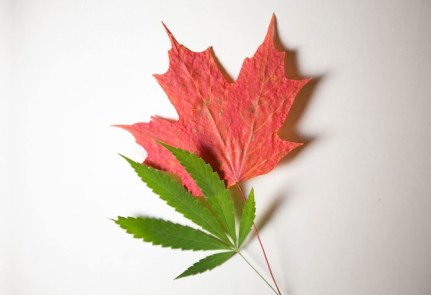
Can you find a purer piece of Canadiana than Maple Syrup, nectar of the great white northern gods (ok, and parts of the the Northern US too).
If all you use this springtime elxir for is on top of pancakes, you are missing a world of culinary delight: dipping sauce for bacon, combine with soy sauce for a fabulous salmon marinade, mix with butter to top off a squash that will melt your heart, stir into your morning oatmeal, fold it into vanilla ice cream, splash it onto your baked beans, mix it with a salad vinaigrette, the ultimate topping for elf spaghetti, or just straight up shots. And, to boot, its good for you, nature’s best sweetener.
A few photos from a nearby maple sugar festival.
Friday photos
Recently enjoyed holidays in southern climes – a few images of what caught my eye (I particularly love the crazy colour and texture transitions on this trunk of the palm tree in the first image).
Friday photos
It’s tillandsia usneoides, more commonly known as Spanish moss, a lovely, lilting epiphyte that not only absorbs nutrients and water from the air but catches sunset light in perfect fire-like hues.
Nice kudos
Posted by phil in Good books, Prayer book on February 16, 2013
It’s the award season – Golden Globes and Grammys done; Academy Awards next up. But have you heard of the Hearts and Minds Best Books Awards?
I know, doesn’t quite have the broad cultural reach of the Oscars or Grammys but if you want to know what is worth reading (largely in Christian publishing), you need to check out Byron Borger’s Hearts and Minds blog and the Best Books Awards. Byron is a bookstore owner in Pennsylvania and all-round book lover. He’s a judicious voice on Christian books worth paying attention and money for.
And I just found out that my book, Seeking God’s Face, was given the nod for Best Devotional Book (a tie with a devotional book for those on the journey through cancer).
No little statue for my mantel but nice kudos nonetheless. You can check out Byron’s Best Books of 2012 list here.
Can I have my quinoa and the Andean farmer eat it too?
Posted by phil in Consumerism, Culture on January 18, 2013
“If you are dependent on people who don’t know you, who control the value of your necessities, you are not free, and you are not safe.” Wendell Berry, “Sex, Economy, Freedom and Community.”
The irony of it is staggering and sobering – and, please, may it lead us to serious reconsideration of our economic habits and practices.
Quinoa – a beautifully simple grain, low in fat, rich in protein, nutritionally loaded, with a fashionable, exotic touch to it – a miracle gift to those concerned with marrying a diet for personal health along with a concern for low environmental impact living. It is coveted by the well-intended as a new super-food and it’s celebrity status was marked by the UN declaring 2013 the Year of Quinoa. Yet in another instance of the butterfly effect of the global
economy, an article in the Guardian reports that this grain, a staple for Andean communities in Peru and Bolivia, is now so overpriced that local populations can’t afford to eat it, turning instead to low-cost alternatives (aka. junk food).
It’s enough to make you crazy – and it should because it seems another example of the economic confusion we call normal. You know the old definition of insanity: doing the same thing over again but expecting different results. We replicate this quinoa scenario over and over, raiding local communities through the global reach of a market economy and trusting the whole venture will turn out for the mutual benefit of all but with the same dispiriting results – local economies irrevocably altered, local ways of life disturbed and often damaged, local communities and cultures ignored.
The Guardian article observes that ”the quinoa trade is yet another troubling example of a damaging north-south exchange, with well-intentioned health and ethics-led consumers here unwittingly driving poverty there.” But it’s more than that – it seems another troubling example of a damaging economic order.
Or maybe it’s just all earnest hand-wringing in the face of inevitable economic change. That’s what food-economics author and University of Toronto professor Pierre Desrochers claims – this is the typical speed-bump along the road of economic development that will bring some improvement in standards of living to subsistence economies.
But I hear a note of economic determinism in the professor’s words, a sense that there really is no standing in the way of such global economic development so might as well lean into the inevitable change. I mostly lack the smarts to understand the economic complexities or the prophetic edge to speak like this often, but there’s an unmistakeable totalitarian vibe to this global economy. It’s like the colonialist impulse all over, so that we, in the well-resourced west, can tap the resources of a far-flung geographic community with little, if any, consideration or forethought for the impact on that community, without naming human values and community needs that trump economic imperatives.
Wendell Berry, a true prophetic voice, writes that “the global economy does not exist to help communities and localities of the globe. It exists to siphon the wealth of those communities and places into a few bank accounts.” Read Mr. Berry – deeply and often.
All this leaves me convinced again something has to shift. Economists out there, can we not imagine new economic practices and systems that serve the well-being of all, especially the poor? It strikes me as morally and economically off to produce a local product in such a way that prices it out of reach for the very ones who cultivate it and depend upon it for basic living. Something stinks in the system and I’m left overwhelmed by the scope. I mean, seriously, how do you do no harm and transform a global economic order? And that drives me to my knees, doing the one thing I can do confidently: praying for the coming of God’s Kingdom. But I want that prayer to get me off my knees too, doing something to see that Kingdom come in our economic order. Any suggestions?
Ah quinoa, I was just beginning to love you – but unless we can find a better way, I’m called to love my Andean neighbours more.
Occupy our calendars
As a new year stretches forward, there wait 365 square blocks of open calendar space to fill up with our living. These calendars are an unscribbled canvas filled with all the possibilities we can
dream and imagine for the year ahead.
There’s a minor deceit, however, in this belief, the mistaken notion that each square is ours for the having. The wisdom of the ages is this: all we are promised is one square – today.
As I enter this new calendar year, I’m trying to live with the understanding that nothing more is promised me than the gift of today, to offer the whole year up to God and receive it back, day by day.
How long can I sustain that sort of mindful living?
Not sure, but here’s a fine prayer from Walter Brueggemann to regularly pray throughout the year.
Our times are in your hands:
But we count our times for us;
we count our days and fill them with us;
we count our weeks and fill them with our busyness;
we count our years and fill them with our fears.
And then caught up short with your claim,
Our times are in your hands!
Take our times, times of love and times of weariness,
Take them all, bless them and break them,
give them to us again,
slow paced and eager,
fixed in your readiness for neighbour.
Occupy our calendars,
Flood us with itsy-bitsy, daily kairoi,
in the name of your fleshed kairos. Amen